This is my final assignment of my minor Biomedical Engineering which was a three month project. The goal of this project was to create an anatomically correct anthropomorphic model of the left heart atrium, with dielectric properties that come close to those of the human heart. This makes it possible to do a good instrument testing and train cardiologists for pulmonary vein isolation operations to treat people suffering from atrial fibrillation in the future.
Cad model
I started with creating an inside and outside mould by designing a CAD model and 3D printing this model. I printed the mould with support (PVA) on the inside, so that the sides were smooth which prevents leakage. This supportmaterial was chosen so that the support would be soluble . The outside of the mould (Grey) was printed with PLA.
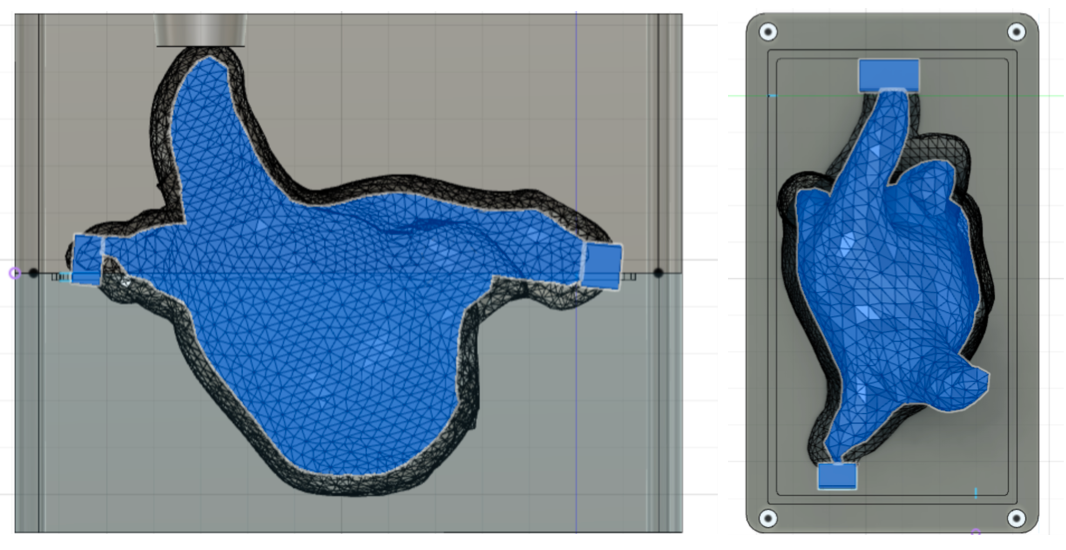
CAD model
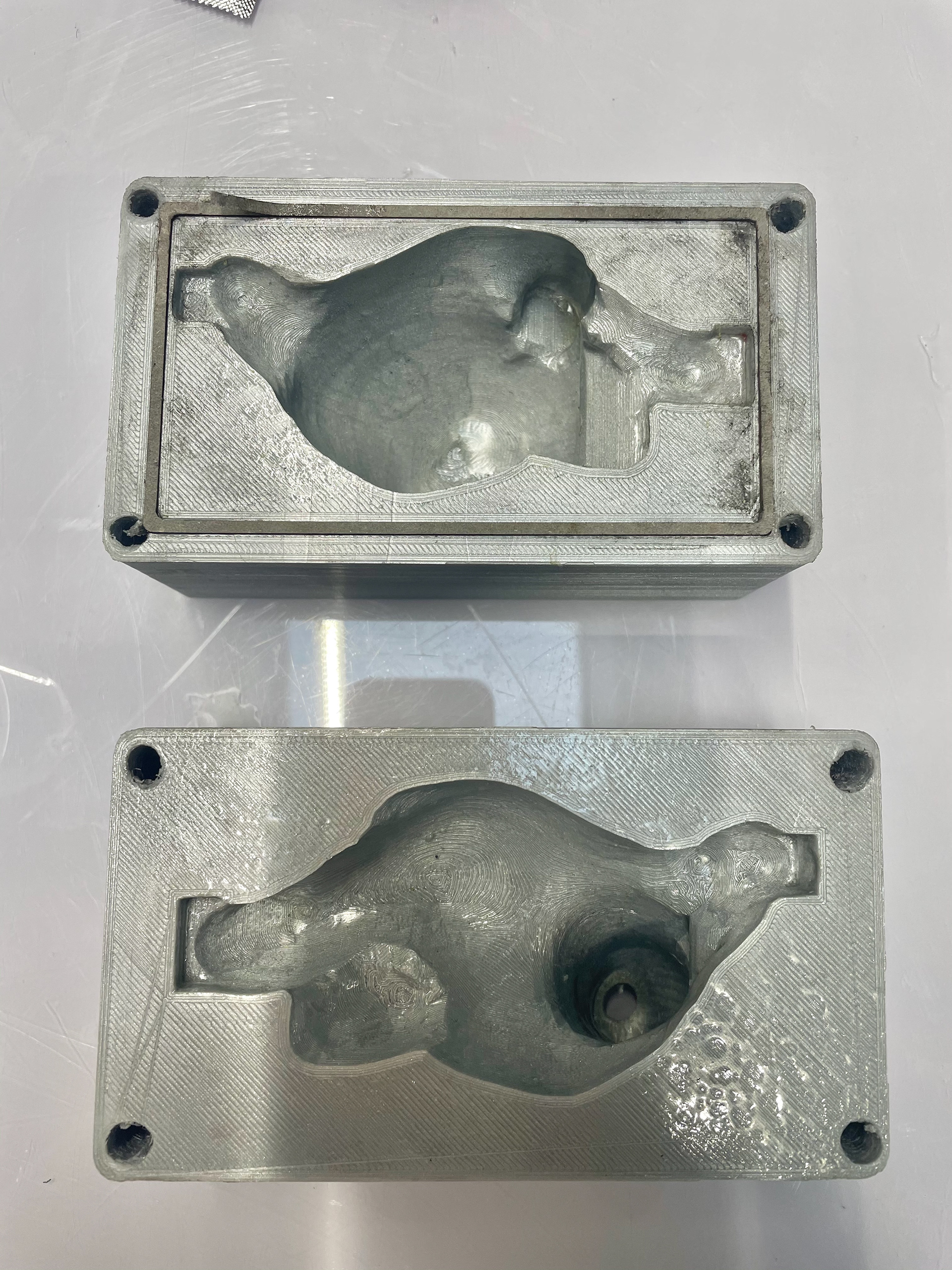
3D printed outer mould with gasket material
The mould
The inside part of the mould (white) was created with (soluble) PVA. The mould contains a seam where gasket material was placed to prevent leakage. We laser cutted the gasket-material so that it would perfectly fit the seam. The mould contained four places to put a bolt and nut so we could tighten the mould. On top the gap can be seen into which the solution was poured.
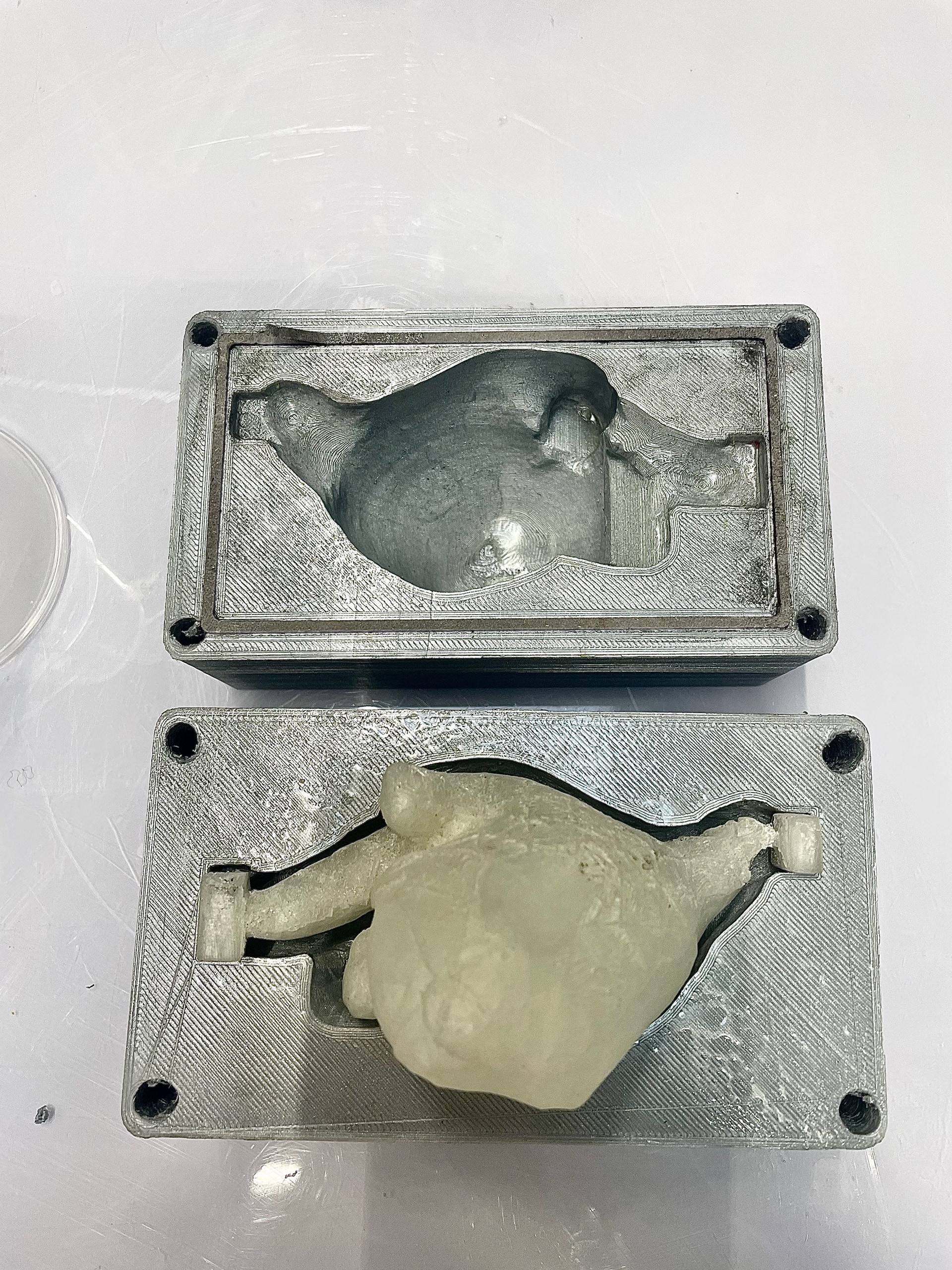
Outer mould and inner mould (white)
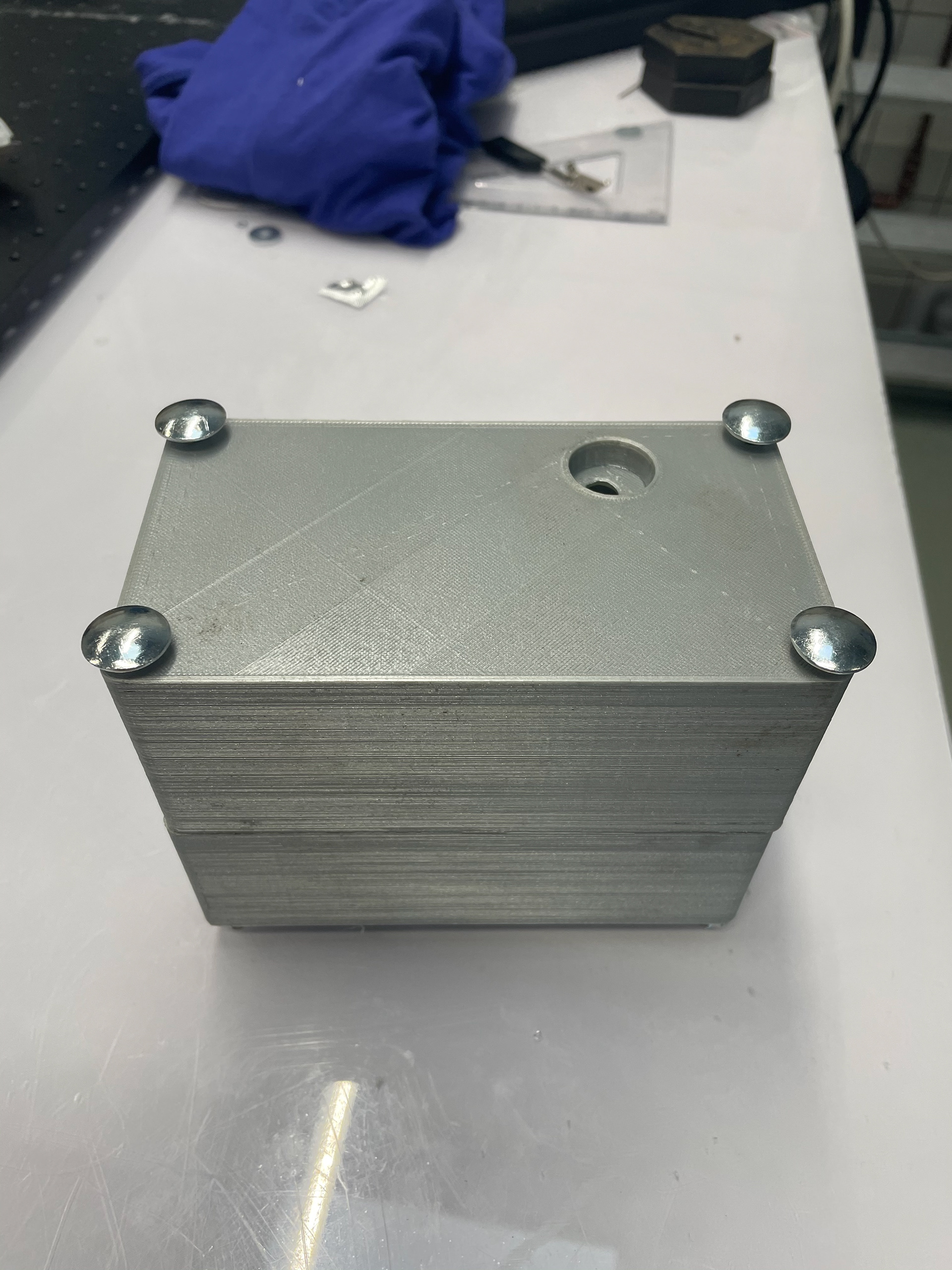
Screwed mould
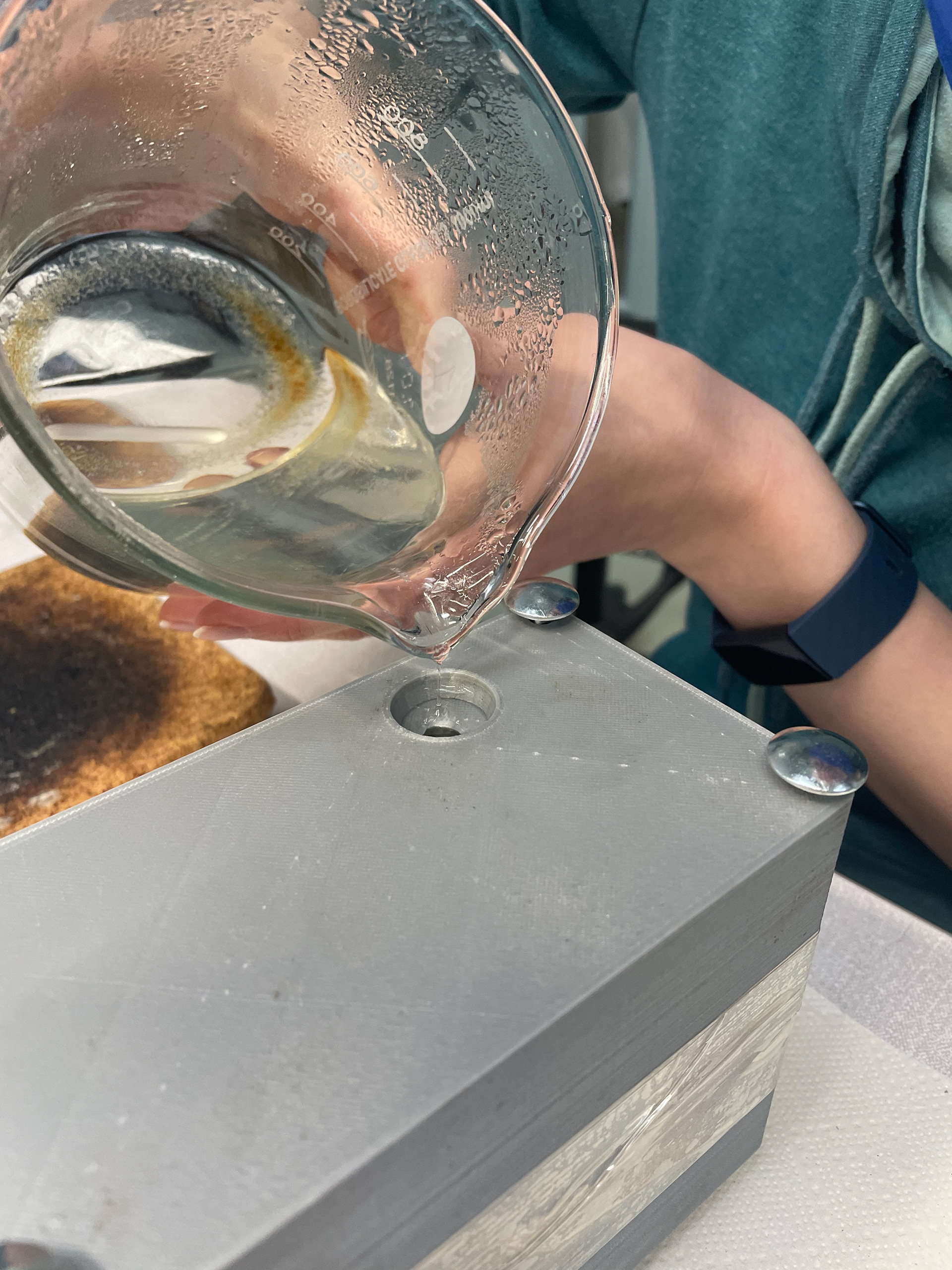
Casting the mould
result after casting
The results after two freeze-thaw cycles
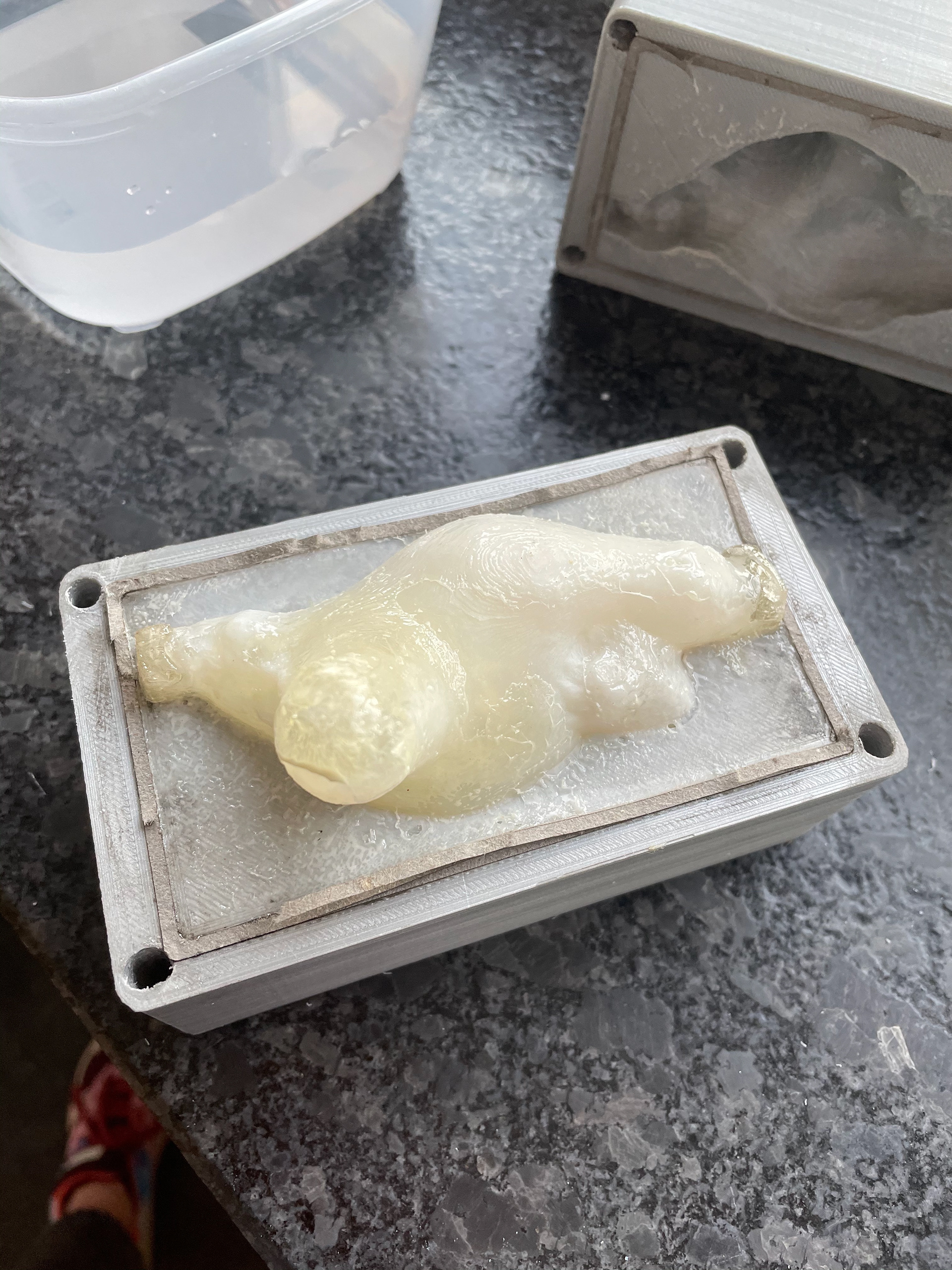
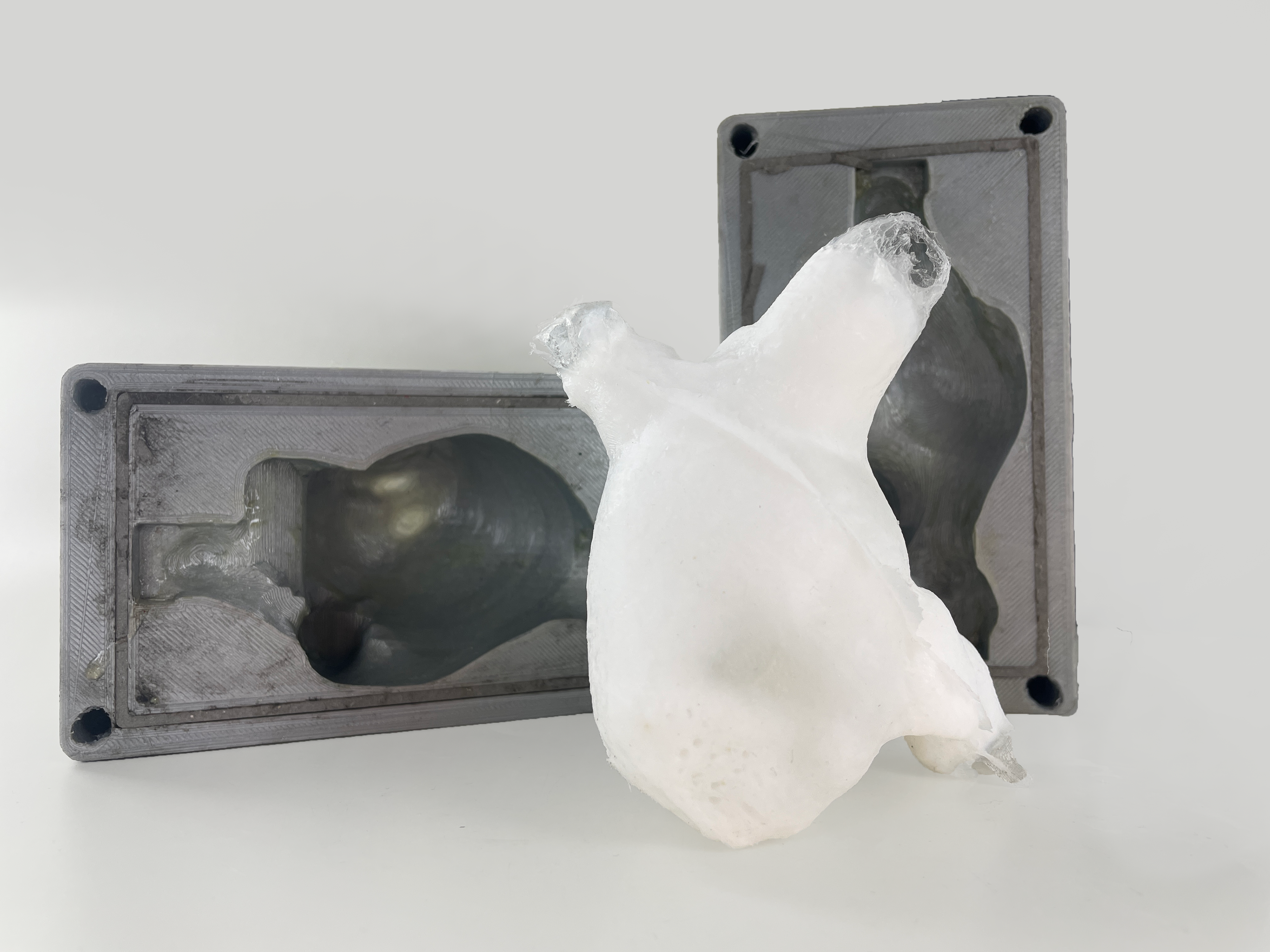
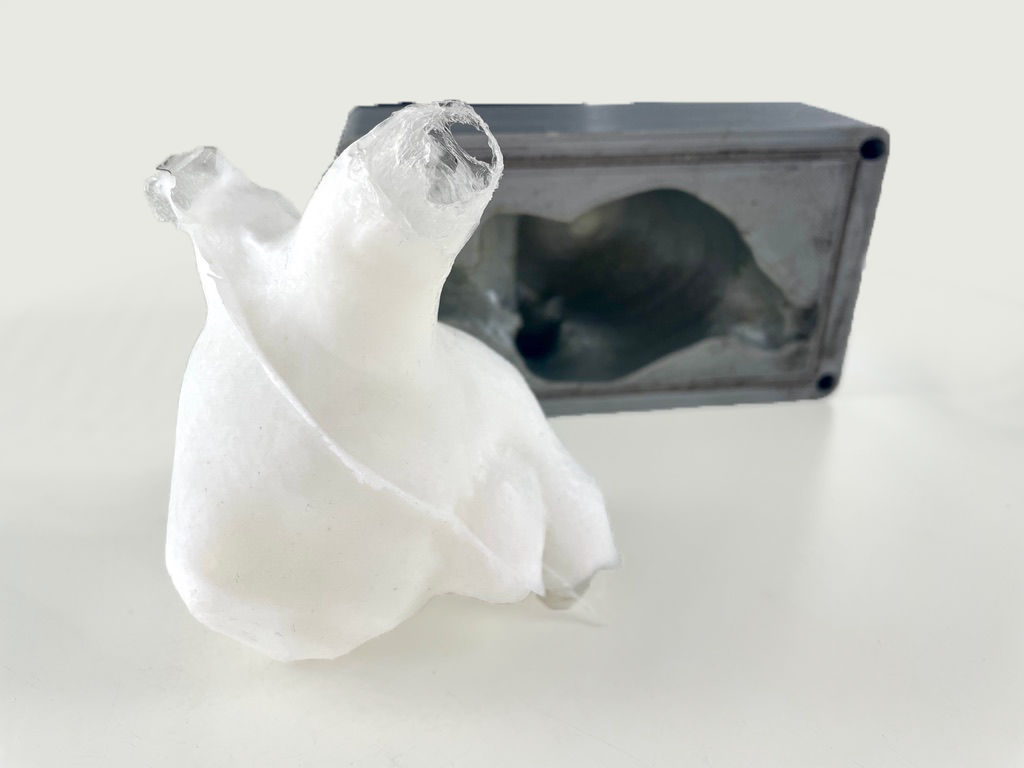
Result after opening the mould
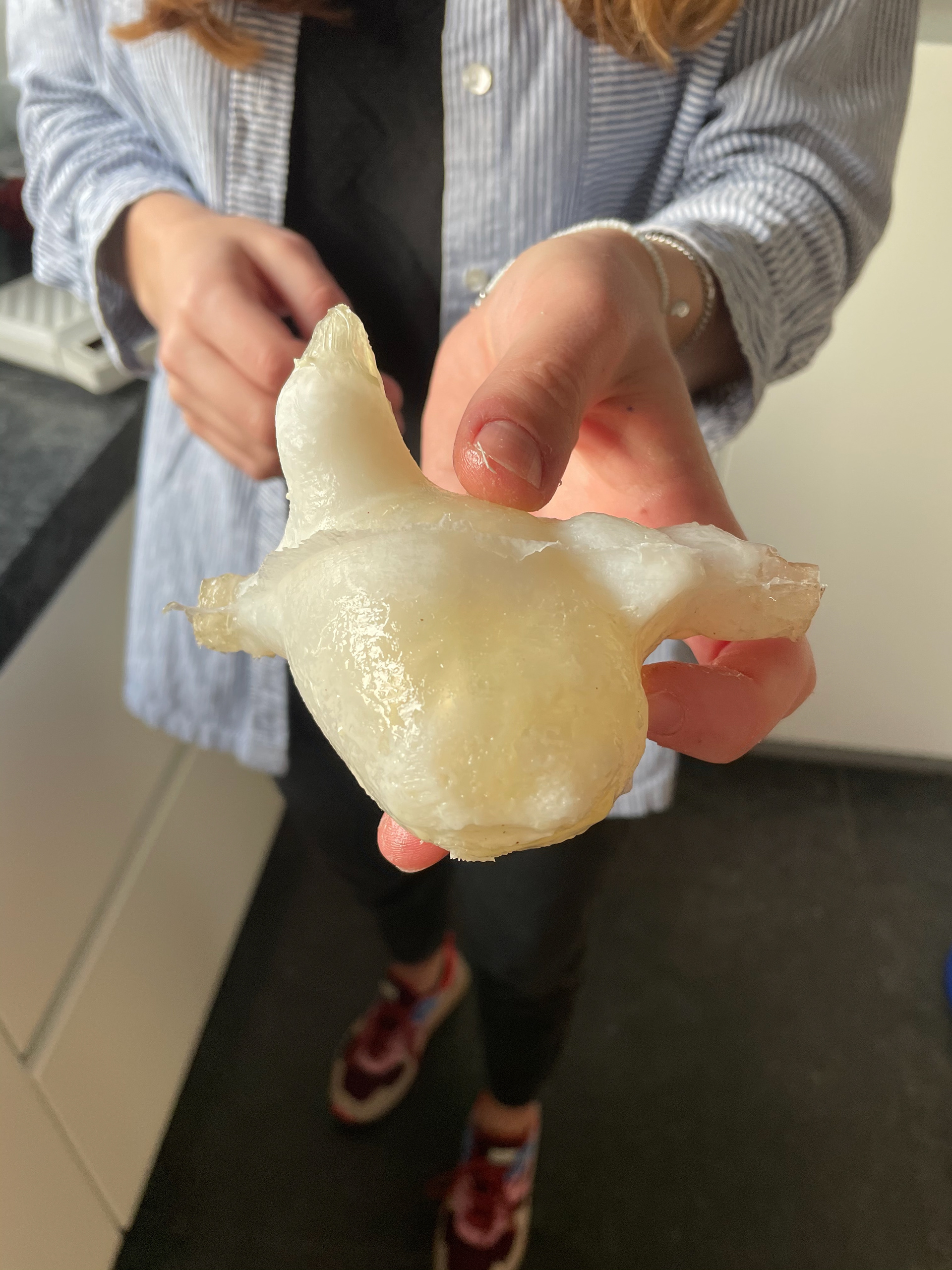
Heart phantom with the PVA inner mold still present
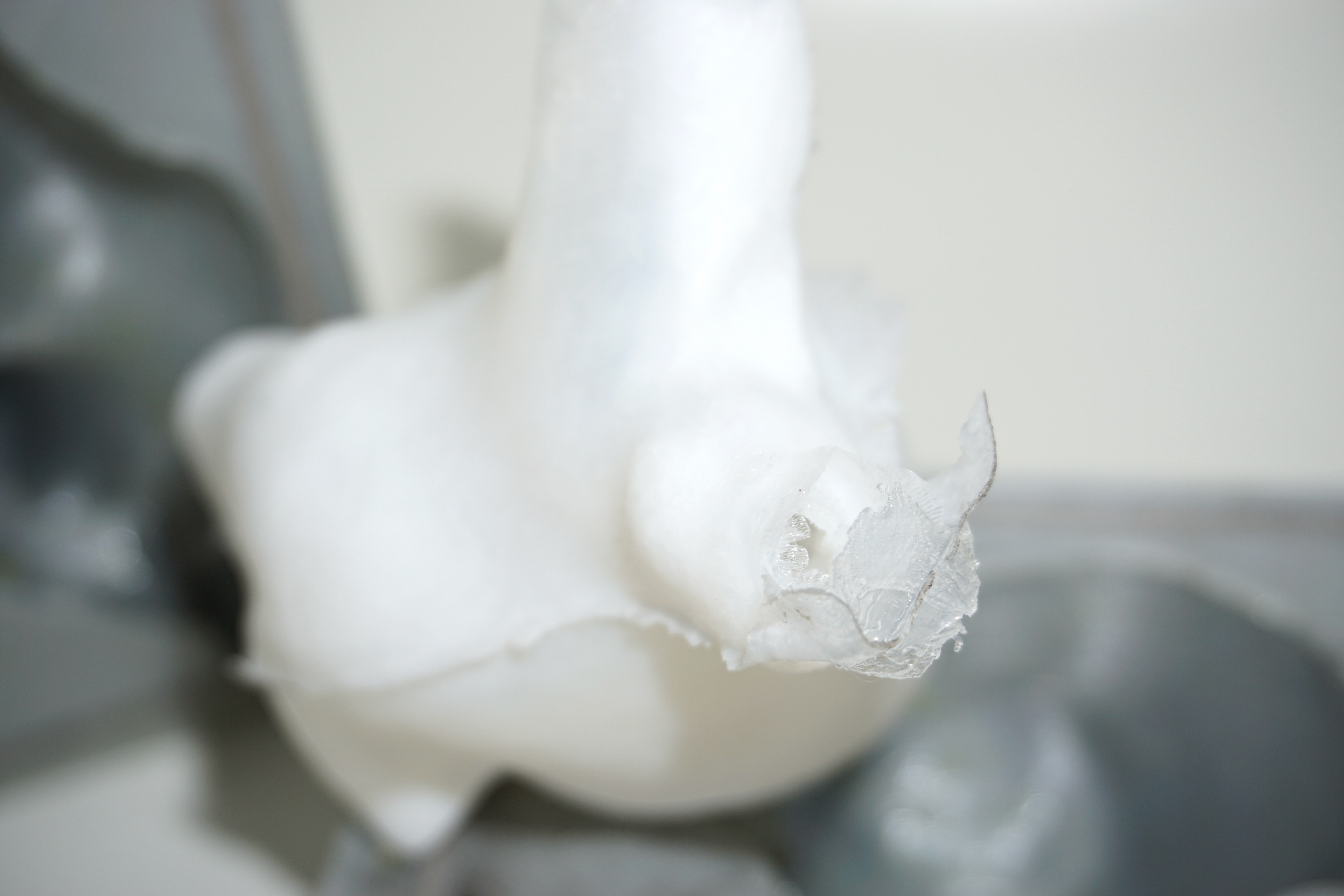
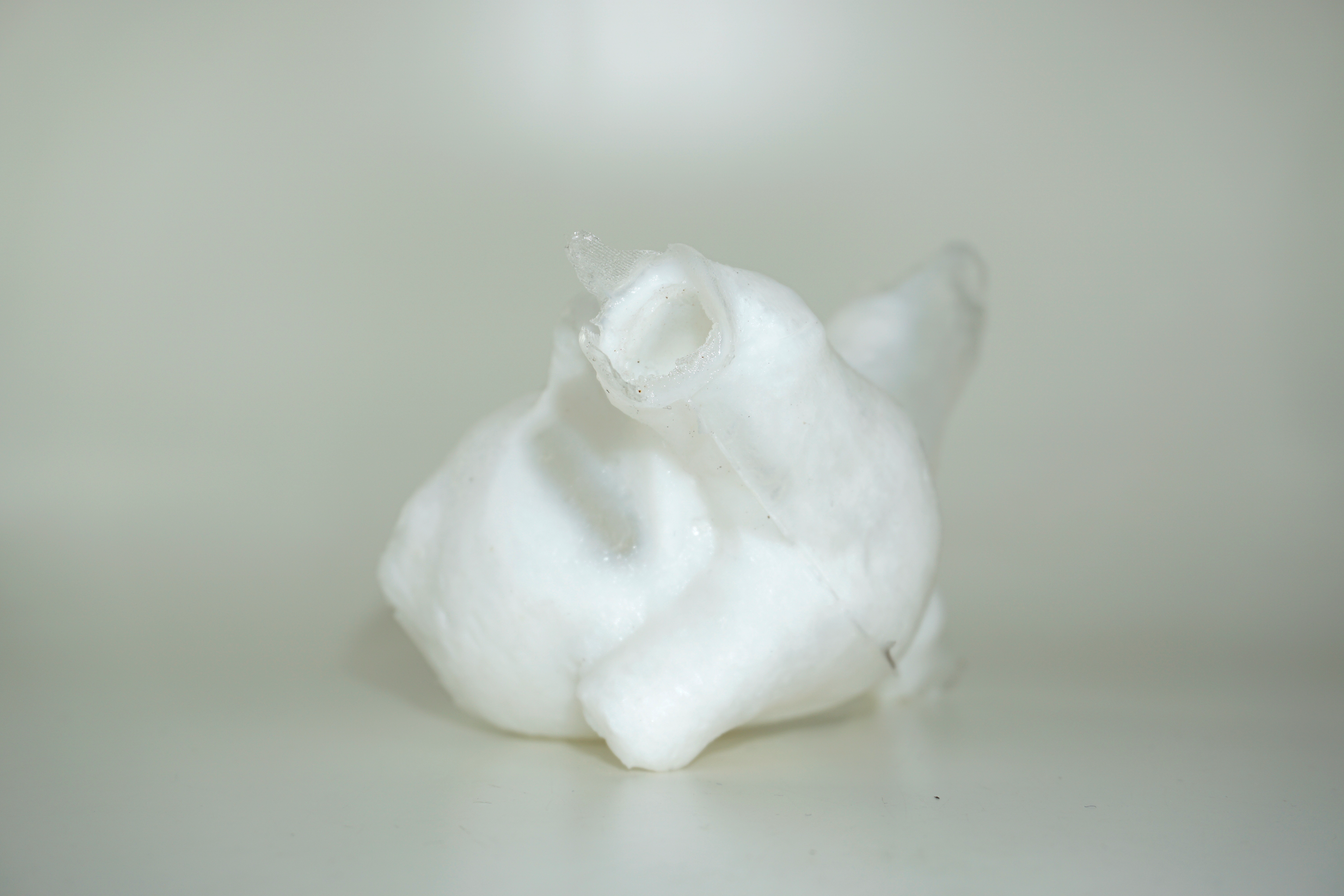
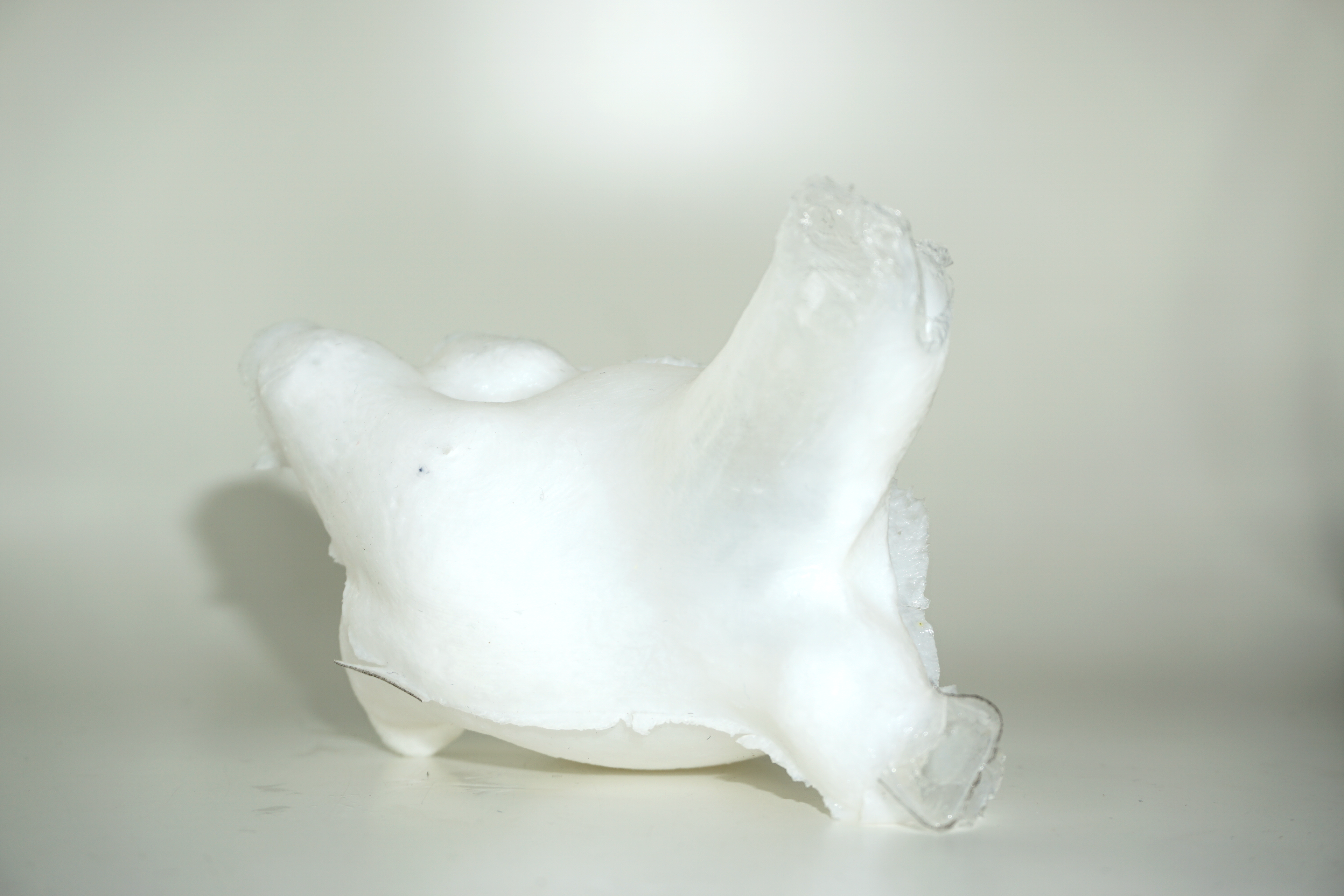
Final result
Result after dissolving the PVA inner mold which creates a hollow phantom.
Used programs and skills:


Prototyping
CAD
3D printing
Composition of materials
Casting