In the field of bio design, designers, artists and scientists are collaborating with
microorganisms to create living artefacts, which offer novel responsive behaviour and
interaction possibilities. Designing such living artefacts can be challenging, as it requires the
designer to take the microorganisms’ needs and responsive behavior into account. For
instance, the microbial growth might strongly depend on the substrate and nutrients. The
microorganism might even die if there is, for example, not enough oxygen available or when
other microorganisms contaminate the habitat. Not
only can the design of the habitat be crucial for the microorganism to thrive, its features can
also be used by the designer to tune microbial growth. During this elective, The
growth of Flavobacteria were tuned by varying features of their habitat.
microorganisms to create living artefacts, which offer novel responsive behaviour and
interaction possibilities. Designing such living artefacts can be challenging, as it requires the
designer to take the microorganisms’ needs and responsive behavior into account. For
instance, the microbial growth might strongly depend on the substrate and nutrients. The
microorganism might even die if there is, for example, not enough oxygen available or when
other microorganisms contaminate the habitat. Not
only can the design of the habitat be crucial for the microorganism to thrive, its features can
also be used by the designer to tune microbial growth. During this elective, The
growth of Flavobacteria were tuned by varying features of their habitat.
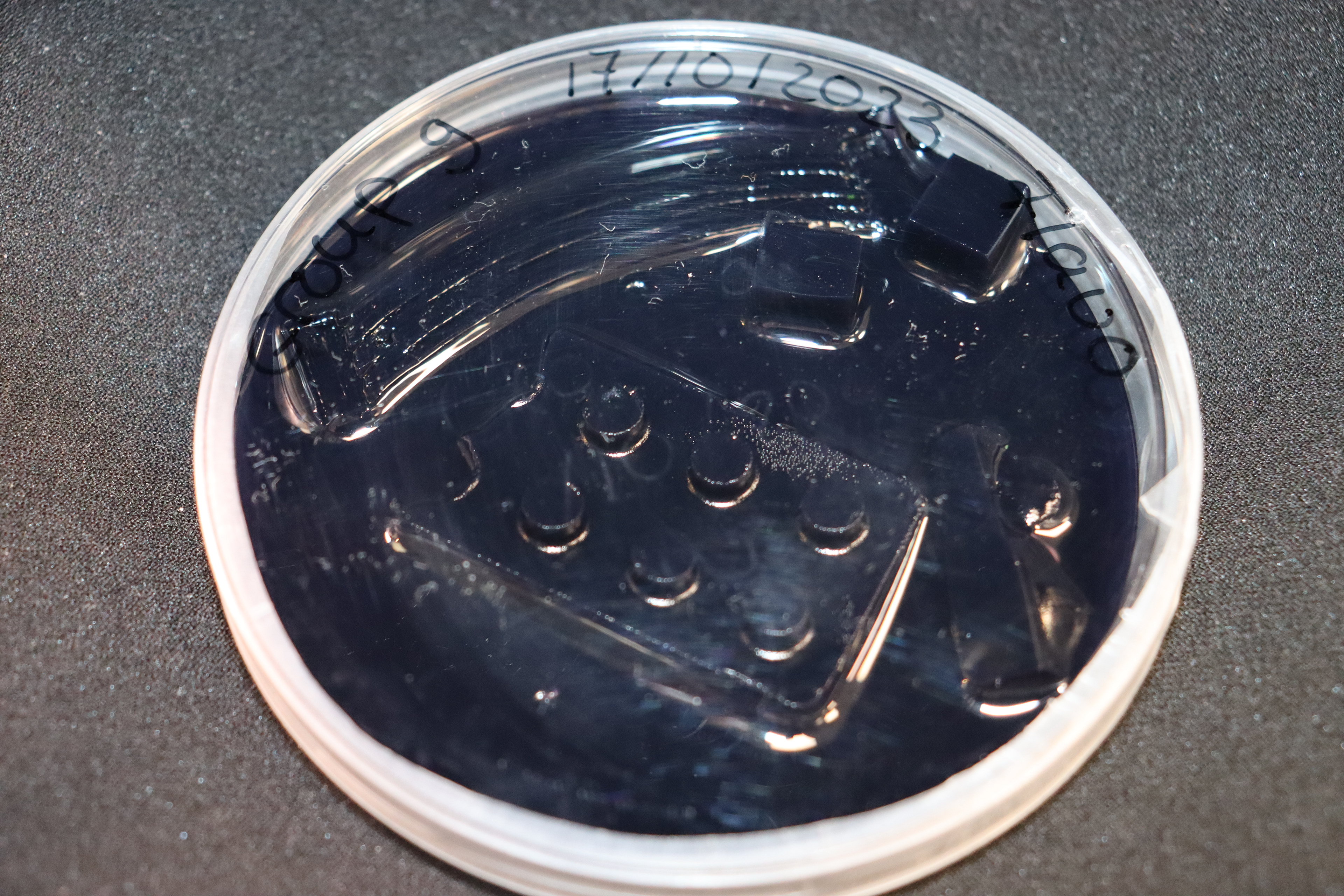
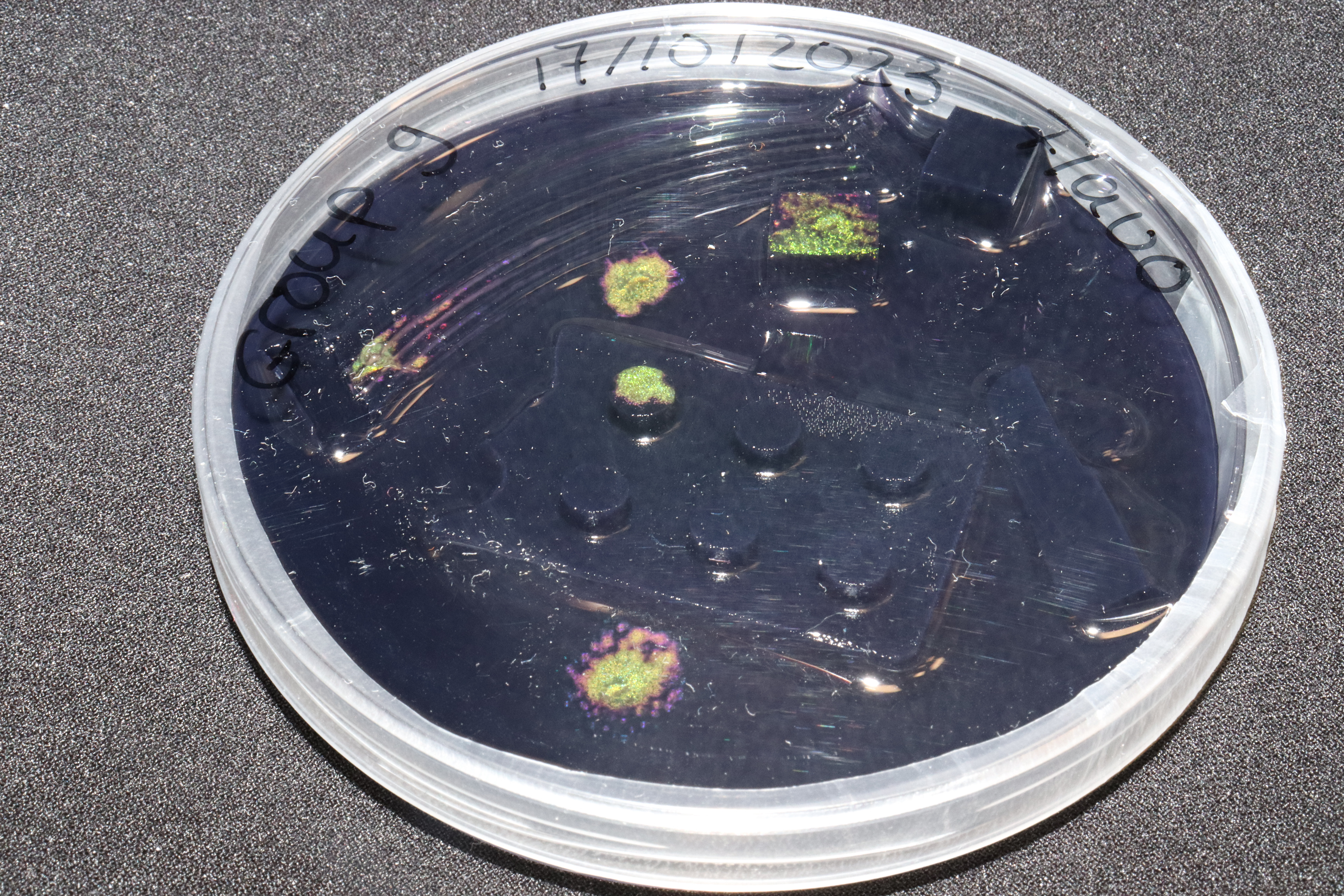
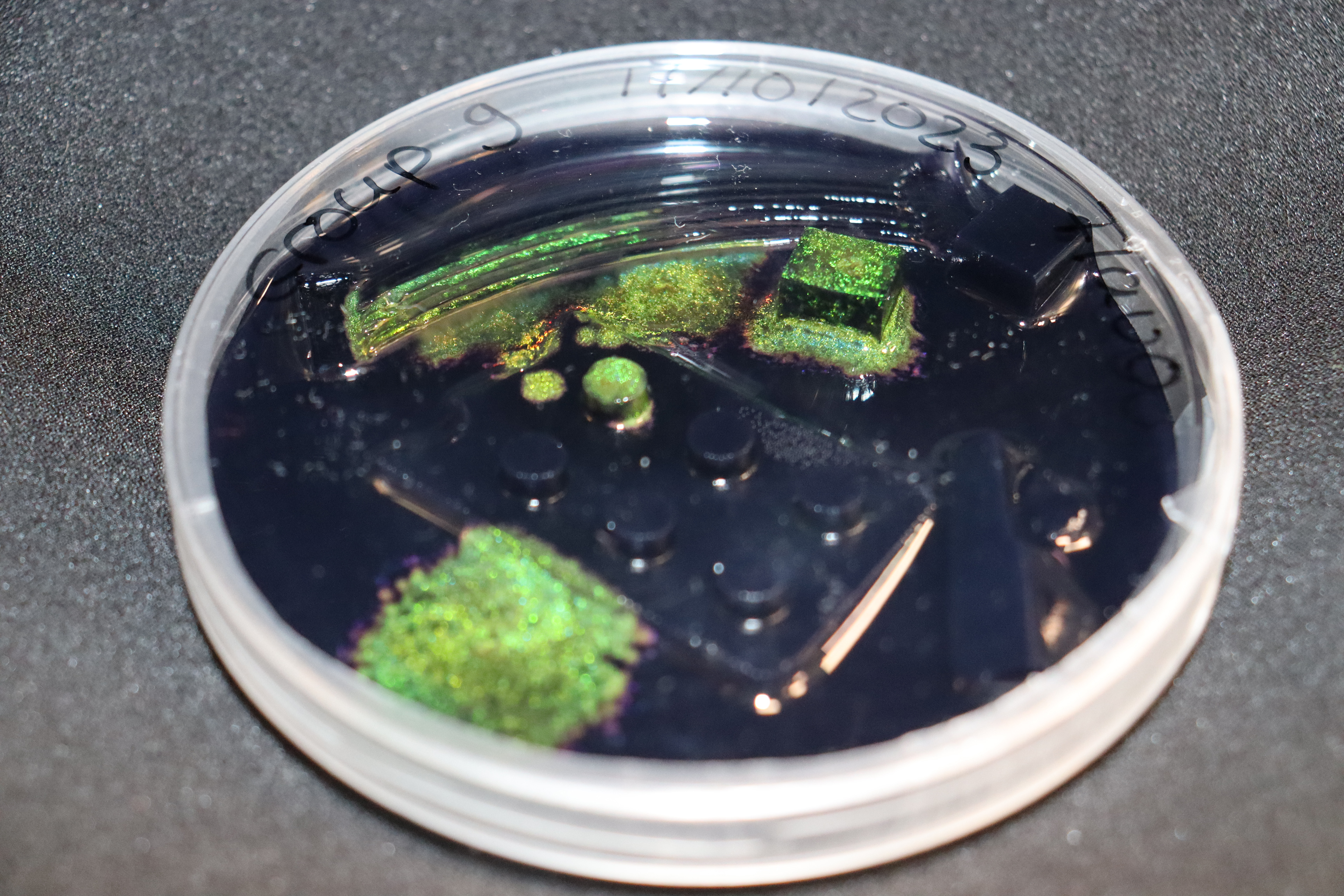
During this elective an “agar landscape” was created by varying the shape
and texture of the agar growth medium. Using 3d printed stamps, a texture in the solidifying medium was created. Over the following period, the bacteria were observed to see how they “explore” their landscape and reflected on the effect of the habitat features on their growth and colour.
and texture of the agar growth medium. Using 3d printed stamps, a texture in the solidifying medium was created. Over the following period, the bacteria were observed to see how they “explore” their landscape and reflected on the effect of the habitat features on their growth and colour.
Flavobacteria are marine bacteria which produce vivid, angle-dependent colour as their cells
organize into structures that interact with light. To form these optical structures, they
require a suitable habitat providing the optimal salinity, nutrients, humidity, access to
oxygen and a semi-solid, hydrated surface to interact and grow on. Due to Flavobacteria’s
responsive behaviour, many other factors affect their structural colour, such as
environmental factors (e.g., humidity and temperature), but also the habitat features (e.g.,
the shape and texture of the agar).